Nicolás Dumit Estévez Raful Espejo Ovalles Morel
Following is an interview with Nicolás Dumit Estévez Raful Espejo Ovalles. He’s a native of the Dominican Repubic and was raised in Santiago. Currently Nicolás is living in the Bronx, New York City. He is a creative who embraces ecological awareness and oneness with the earth and all of its lifeforms. Nicolás speaks with compassion and deep love for humans and nonhumans and he seeks to practice a vegan lifestyle and diet. Nicolás and I met online, while he was researching the work of Antiga, a longtime Asheville witch who influenced so many during her time on earth. I feel he has an affinity for Antiga because he has also chosen a path where his interactions with creatives and spiritual beings are primary and central to his life. He is the progenitor and founder of InteriorBeautySalon.com, a website that celebrates divine interconnectivity and expressions of a profound nature, in simple, tangible ways.
EK: I love that your name is lengthy and says so much about your ancestors, and your heritage. Can you briefly comment on the order of your names, and the significance of each one? Do you feel there is a power in retaining your true and full name? Many in the spiritual community take names that they choose or manifest as a way of changing themselves and their outlook on the world. Is this a good practice in your opinion? Or is there a possibility of some crucial part of ourselves that is lost to this new name?
NDEREOM: Dear Elizabeth, it has been a pleasure to correspond with you after finding your website in connection to an interview that you published on Antiga’s work. I had been looking for information about this witch and could not find much online. I am glad that you archived your conversation with her.
Long names can be stereotypically Latinx and Spanish. Picasso had a Rosary of names: Pablo Diego José Francisco de Paula Juan Nepomuceno María de los Remedios Cipriano de la Santísima Trinidad Ruiz y Picasso. I figured, why not, and I started to use last names related to my ancestors. In Latin America and Spain, we used to use two names and these had to be related to a Catholic saint. At least one of then, I would say. Nowadays, I don’t think people observe this. Names in Latin America are also tied to class, with old families with money naming their children traditional names. English names were looked down upon. Not so much these days.
My names have stories and histories, like most people’s names. My father’s name was Nicolás and my uncle’s name was Dumit. Dumit is also a Lebanese last name that some of my relatives use. In my case, it is my name and that of my uncle who came to the Caribbean from Lebanon. My mother wanted to use a French and Arabic name for me and my father rushed to register me with the city before my mother implemented her selection of names. Nicknames are popular in the Dominican Republic and I have more than 5, perhaps. I enjoy this complexity. It was not until I arrived in the USA that I notice how many people do not use their maternal last name and they just use an initial for their middle name, not me. Estévez is my father’s paternal last name and it might have come to the Dominican Republic from Venezuela, I am not sure. Raful is Arabic and it was my mother’s father’s last name. Espejo means mirror in Spanish and it was my father’s mother’s last name. Ovalles was my mother’s mother’s last name, which was not her real last name, but legally it is now…it is such a long story. Morel is connected to my father’s family and it is from Catalonia. The Dominican Republic is a vortex of cultures and spiritualities like no other in the world. There is no equivalent to this in the USA in terms of mixing and mingling. The island where I come from is the epicenter of the American hemisphere from where the whole European colonizing genocide started. It is a whirlpool of energies.
Personally, I will not change my name and I understand that I am happy with how I was named and that I do not associate my names with any traumatic events. For some people, this is not the case. In some instances, individuals have names they are not comfortable with. There is also the idea of reinvention that names can play when a person marries, divorces, becomes a USA citizen, or simply wants to become a different person. I do not see anything wrong with those who want to change their names or who seek to embrace a new identity. Again, I remain rooted (in terms of mysticism and activism for justice) in the spirituality of the religion I was born into, Catholicism, and in how I was called at birth. I am aware that there are privileges involved in this and I acknowledge them.
EK: InteriorBeautySalon.com is such a powerful and magnificent name for a website. How did you come up with the concept for this site? What are some of the ideas you would like to perpetuate? How do you decide to invite certain people to perform an interview? How can we preserve the action of speaking wholly and honestly with one another?
NDEREOM: The idea of The Interior Beauty Salon has been percolating for many years. However, the name materialized during the Covid-19 pandemic. I was literally confined at home for six months walking in my backyard in circles. The backyard was covered in green moss and you could eventually see the trail that the walking made–it left a brown trail revealing the bricks covering the ground. After a certain number of circles, I would sit on a pink metal chair and meditate. There were days when I was meditating for up to three hours during which, I would receive some downloads. This is how most of the sessions of the website happened, one by one. I would intuit a voice telling me what to do next. Jeanne Criscola, an artist based in Connecticut offered a website-building class that was free, which was a blessing. I thank Jeanne for helping me to reinvent myself during such harrowing times, like those during the pandemic.
The Salon is open to creatives of all backgrounds. It has been clear to me since its inception that this was not meant to be another cool place in the arts featuring artists under thirty and with no crow’s feet or grey hair. I love working with older minds and with elders and honoring lineages, which is not necessarily what the art industry does. I also enjoy making space for younger voices. I value balance. To this end, it was also crystal clear to me that I would not limit The Salon to artists, but to approach creativity from an expansive perspective that includes anyone who channels the creative force that is available to all. I do not use the term artist–unless for grant purposes–to refer to myself, I see myself as a creative.
The Salon aims to be vegan so, while not judging or dismissing any parts of the work of creatives, it does not focus on the work of those using non-human animals in hierarchical ways or in using non-human animal elements to generate artwork. This applies to anyone mistreating or exploiting plants, or Earth, or working with toxic materials. I aim to respect all creatures. My biggest emphasis now is on zero or as close to zero footprint when doing anything. I am increasingly interested in creatives who do not generate objects. This can be anathema in the art industry…which goes to keep the capitalist machinery going. Perhaps it is about thinking carefully what I want to put out there as a creative and how to generate the least harm when making objects. But also questioning class issues in regard to making. Who can acquire what I make and how can I make the creative process available to others who do not have the means and take care of myself as well. I work with grants and almost all of my events are free.
EK: I see that you find remote interviews a precursor to us leaving our bodies and becoming spirit, once again. “Doing interviews online is a prelude to dematerialization and robotization and not showing up physically someday.” The ‘Voices’ page fascinates me. So does your relationship with Linda. How do interviews encourage us to connect to others – across space and time?
NDEREOM: So much has changed since the internet. Who would have imagined teaching, healing, and consulting from home? One of the groups I have been connected to does Therapeutic Touch through Zoom. There are practitioners doing Reiki online. I can easily give talks at different universities right from where I live. This can and has been a blessing, but it has also created a society that needs to be texted before called over the telephone. People from my generation just used to pick up the telephone and call. If the person was not available, they did not answer or said that that they would return the call later. There is plenty of space to hide behind screens and I am wondering how we are going to learn as a society to deal face-to-face with a variety of situations that emojis cannot replace. It is a long preamble to respond your question. I do enjoy the possibility that the internet offers. This is how we met and this is how I have met many of those who are now so influential on the path I am walking.
In terms of dematerialization, it always existed. What has happened is that technology has been revealing so much of the unseen and the forces that are at play in this dimension and others. I wonder about the time when we will be able to materialize objects from one place to another, although that is sort of possible with 3-D printers. I wonder when we will be able to transport ourselves physically to a distant location in a matter of seconds. The conversations that are part of The Salon, and written texts in general, can be awakened by the reader at any time in the future. That was the premise of Enacting the Text: Performing with Words, an exhibition that I curated at the Center for Book Arts in New York, and which raised the question of how readers can perform performance prompts and scores every time they engage them, even if silently.
Linda Mary Montano has been a teacher and mentor when it comes to interviews. Her book Performance Artists Talking in the Eighties is a pivotal example of this genre. I would say the same in relationship to performance art and art in everyday life–Linda has been at the forefront of these fields. She is the person doing this work who has, in my opinion, taken ideas beyond what the arts can possibly expect–or fathom. Linda is a true visionary and I am aware of the gift that the connection with her embodies for me and many others.
EK: What sort of rituals do you have that you perform on a regular basis in your life? How do these rituals connect you to other dimensions, often outside of the space/time continuum? How do they connect you to ancestors that have come before you?
NDEREOM: You ask such great questions. I am trying not to continue prolonging my responses and yet, my brain is being stimulated by your thinking, plus, writing is something that I truly enjoy. I grew up in a home where rituals were part of the day-to-day. Many of these were informed by Catholicism and others by Afro-Caribbean spiritualities, or by the mixture of these two. As I became an adult, I gave up ritual-making and eventually took this up again through the creative work that I do. I explain to people when asked to talk about the spiritual aspect of what I do as a creative that I came into art through religion and spirituality. Religion and spirituality have been my art school, which speaks to my understanding as to how all art initially had a sacred purpose, and the intention to connect with the bigger picture. Caves were the galleries!
I tread ritual carefully. I cross myself upon getting up, upon leaving my home, upon taking off on an airplane. Once Catholic… Moving forward, I have been interested in performing in spaces collectively deemed as sacred and most recently so much of what I do happens outside in conversation with rocks, trees and rivers. The other day I noticed how I have been slowly leaving behind the artificially-maintained galleries and museums. It scared me a bit at first, and then I became at ease with this further progression into the world at large and outside of the confines of art constructs.
I am comfortable crossing dimensions with the limited skills that I have to travel this way. What I mean is that I am okay with moving between the dreamworld, talking to my departed ones, and entertaining visions. The same applies to that which I am unable to explain. The questioning of all of this takes too much energy that I would rather use toward keeping my curiosity going. I remember how my grandmother told me of a man who went through the window of her apartment in New York. I kept checking the outer wall leading to the window and telling her that it was impossible for a person to climb up that surface. Was it that she had a mini stroke? Did she fall half asleep? My grandmother became upset when the story was questioned. If it were now, I would totally accept it as true. Who am I to question as real or not what another person experiences? Back to your question about connecting to my ancestors, I talk with them on a regular basis. I know that they accompany me through life and care for me during the most difficult parts of this existence.
EK: I see that you’re trained in Family Constellation therapy. You have correctly identified the source of this practice as Zulu. How can we learn from this tribe to bring our ancestors forward, in the embodied life? Are there any obvious dangers or precautions to doing this work? Do you feel that those who are not trained in recall of those who have crossed over, can benefit in this type of learning? How?
NDEREOM: Suzi Tucker was the being who trained me in Constellation Therapy. I would say that she might be the most informed person in this modality. Suzi trained directly with Bert Hellinger, the former Catholic priest who, in turn, learned this practice from the Zulu people. This is as much as I know about the origin of this form of therapy, and I hope to do more research about it to inform myself about its essence in the African continent, to which I have ancestral ties through my father. Now that you ask this question, I see it as my responsibility to find out more about the Zulu people rather than simply accept the information that has been passed down to me.
A family constellation session facilitated by a competent practitioner can reveal so much in a short amount of time. The field that is co-created between the client and the representatives is one full of messages coming from all directions and from lineages that can be traced to time way back. Everyone who I am connected to by blood has influenced my path and cannot be effaced. Most families have secrets that have been kept hidden to protect the group or specific members of the group. There is incest in families, and there are those who have been exiled because they have been a source of conflict or embarrassment. Everyone who is part of my family seeks to be seen and has played some part sending me forward. I keep pondering about the queer relatives that had to lead silent lives out of fear for their safety. I want to tell them that I honor their journey and that they have helped me get to where I am. I can see how many people can benefit from this practice and I cannot guarantee that it will work for everyone. Regarding safety, a facilitator who is not skilled heart-wise in the intricacies of family constellation can cause damage and see themselves walking through a perilous trail.
EK: You speak about receiving blessings from those who have worked with you. I want to offer you a blessing right now. It comes from me, and directly from all of my ancestors and the fairy tribe (sometimes called the 13th tribe of Ireland). The fairies were once a visible community of beings who taught the Irish about magic, art, and the cunning use of warfare. Epic battles have been fought against their adversaries, the Fomorians and the Milesians. The fairies exist today, in the liminal spaces of our consciousness. The fairies are inhabiting spaces inside mountains, under the seas and lakes and in deeply forested regions of the earth. They emerge from these places to give us messages. My blessings are from the entire tribe.
NDEREOM: Thank you for your thoughtful words. I wonder what would happen if we were to partake of the practice of blessing those we come across as we walk through the day. Also, blessing food, blessing plants, blessing those who help us…
I met my Irish brother in Hong Kong. I can’t explain this at a conscious level. I was invited to talk in that country and I coincided with a person from Ireland with whom I felt an ancient connection. He is a songwriter and activist. I will send him a message when I answer the remaining questions. May my Irish brother be safe, be surrounded by those who care about him, may he experience ease and may he be loved.
EK: In your devotional practices, whether they are done solitarily or within a group of people, do you have certain deities that you recognize and bring forward?
NDEREOM: The Virgin Mary is central to me. No Mary, No Jesus, says a phrase that I have heard!
I see her as my connection to the Mother. This is not to dismiss the complexities that arise when unraveling this archetype. I would not want to bypass issues of gender, sexuality, and misogyny. The other day, I ran out of a church when I heard the priest talking about how the Virgin Mary consented to be used by the Holy Spirit, something like this and I am not quoting him verbatim. I may have heard the word slave too in connection to Mary’s pregnancy. #MeToo. I knew I had to dash outside when I encountered this patriarchal theology. My first internal response was: “What has happened to the progressive thinking that Vatican II set forth? Why are there no more voices like my theology teachers, some nuns and priests, now into their 80s who challenged me to consider all kinds of ethical issues regarding Christianity?” I miss them. I want them by my side.
It is clear to me that the Marian narrative has been co-opted by most of the institution. I want to believe that the Marian essence can be liberated. Perhaps I am being delusional. I see Mary as potentially siding with women-identified people struggling in exploited countries, in the refugee women who have to leave their countries to secure a safer place for their children or themselves, and in the trans-women who have to confront violence and live in danger. I see Mary getting off the pedestal and walking with each one of her sisters in trouble.
Personally, I am drawn to sites of Marian pilgrimage and I hope to continue to visit more of them. Many of them are hostage of the institution and yet, the power that emanates from the ground can be felt. These loci of apparitions elicit so many questions, metaphysically and paranormally speaking about those who came across the visitations who paved the way for the shrines. What are the dimensions that collided or ruptured to make the encounters possible? There is so much to this. I am also uneasy as to how the Spanish colonizers may have staged fake apparitions to take over the land and cultures of the Other.
EK: Do you feel it’s important to teach others (perhaps in their late teens or twenties) about the ritual practices and connections you make with others and entities on the other side, and why and how you practice this art?
NDEREOM: It is inspiring to see how many more creatives/artists are working with healing and rituals. I just hope that this is not a trend in the art industry, and that it is something that is going to go beyond the surface. I encourage younger creatives to research and honor the path of those who have done this kind of work for decades, if not longer, before it became acceptable to meditate in galleries and museums, before sound baths were given spaces in fashionable white cubes, and before healing was a word that curators and funders could tolerate in a grant proposal. Once upon a time, I had to use symbols to title a piece so people in the gallery in Manhattan where I was performing hands-on-healing would not freak out. Linda Mary Montano, Josefina Báez, Geo Ripley, Donna Henes (Mama Donna), LuLu LoLo, Gina Athena Ulysse, Eliza Swann, Jennifer Zackin… They and many more have been here making sure that what is happening now is possible. Ancestors have names and last names. I make it my job to name those who have sent me forward with such generosity, even those I have not met in person.
Another suggestion is to use caution when kindling rituals and make sure that you have the guidance that you need. As Linda Mary Montano would say, “Do not harm yourself.” Do not harm any creatures. Consider going vegan! Simplicity is fine.
Rituals are a way of understanding this complex experience called life, as well as making tangible the unconscious to metabolize it at palpable level. A ritual can entail arranging your meal in the most gorgeous way, then giving thanks to everyone who labored to get each item to you–and finally integrating it to your system. Another ritual can be giving your body full attention while showering. Waters are sacred. Let us treat them with respect.
Nowadays, everyone seems to be in the business of calling ancestors. I would not want to call a departed one and leave them stranded in this dimension. There are protocols for calling ancestors. I have traveled far and deep with what I do creatively. I have been places from which I do not know how to return. I have learned to prepare before embarking on such journeys. Holy Spirit, protect me from danger and show me how to be kinder.
EK: Have you spent any time in rural or remote areas, or forests and wooded areas, that seem untouched by the villains who plunder our planet? Greed and outright arrogance and a feeling that they dominate nature motivates these types of people. Have you witnessed any animals that have been driven to desperation to find food and a home for themselves and their progeny, after demolishing their forest?
NDEREOM: Last year I was in one area of Gaia that I am hesitant to name for fear of tourism trampling on everything. This is a locus where shamanism is part of the cultures and many creatives seem to embrace Spirit. I was taken aback by how people there were not in the least surprised by my mention of ritual, of mystery, of the sacred. But to say that this is a pristine place safe from plunder would not be true. The Earth’s gifts there have allured empire to ravage parts of it. Decolonizing came up over and over in the conversations I had with those I met in this place. So much has been forcefully effaced for political gain by the oppressor. And there is a stir in the collective soul for connection with the ancestral.
I am an urban dweller who feels a pull to the woods, figuratively speaking. I was born in a country in the Caribbean whose capital can make Manhattan look pretty boring. I was fortunate to move with my family to a relatively suburban part of the city of Santiago where my backyard was acres of trees and a pond full of bullfrogs. I would watch horses roam and I actually got to see one being composted by nature when dead. Every day I would take a walk to spend time with the once magnificent equine body, now in a stage of decomposition. I did not know that then, I was doing corpse contemplation, similar to the Buddhist meditation where people are exposed to dead bodies to learn about impermanence. I do not want to know what happened to this school that was the wilderness beyond my backyard. The pond where I used to sit was probably drained and built upon. The thousands of butterflies that would come out all of the sudden at a certain time of the year, are probably gone. Where there was Spirit there are now airwaves broadcasting the newest reality show on Earth, the DT presidency. I pray for ponds to come back from deep below and to be repopulated with life. Do not drain more swamps.
EK: Have you experienced being in the presence of a (wild) animal? If so, do you see this as a spiritual sign, the sightings and interactions you may have with this animal? Do you see yourself as a part of the animal world, as a mammal that walks the earth? How would you describe your relationship with other mammals, both domestic and wild?
NDEREOM: I cannot recall being in the presence of a wild non-human animal because of my city upbringing. We had no poisonous snakes, but we do have tarantulas and going to art school I go to see tons of them crawling on every surface. There was a season when they would emerge. I got to experience the same thing with crabs. Thousands of them taking over a place. Wait, I used to swim all by myself with groups of Manta Rays. They are incredible. I had no fear of the sea, and once I almost grabbed a Morey eel with my bare hands. I missed it and I would not try this again. Have you seen their jaws? Just google them?
I have been a cat before. They are family. I see myself as a student in their school. They are such magnificent creatures. It is obvious to me that I am a human-animal because it is difficult to escape such a construct. I am aware that I hold so many privileges that put many beings at risk. I try to see myself as equal with all creatures. This can pose ethical conundrums. All beings, in my view, are animated by Spirit. Life is one. This prompts me to consider what I wear (no leather or non-human animal products, unless second hand–and I want to avoid that karmic energy) I am also conscious as to what I eat.
EK: Can you tell me a little more about your public performances? And how they tie into your own spiritual expression? What are you attempting to convey to others when you perform? Can everyday life be a performance (at times, or all the time)? Do you use performance as ritual to help change yourself and others?
NDEREOM: What I do has entailed a search for transformation. But as I age and get wrinkles, and gray hair, and slow down… I think that my impetus is more focused on being with what is, rather than to want to transform life. I am speaking mystically here–maybe metaphysically. This will not apply to the activism involved in the actions in which I immerse myself and invite others to join. Shifts need to happen in so many areas of life as it relates to gender, sexuality, class, race, and more. The apparently regressive era that the United States is entering in 2025 attests to that. Although, I will say that this time is not regressive, because all of this evilness was always here hiding in plain sight: the classism, the racism, the sexism, the speciesism and the ageism.
Less and less, I do work for curators and for the art system. I realized that this was like turning in homework and I was not the most disciplined student until I reached college, and then again, I knew that I was meant to unschool myself after the learning. More and more, I am listening to Spirit and doing what comes from the soles of my feet.
Your question about art and everyday life is one for people like Linda Mary Montano, Billy X Curmano, Linda Sibio, Annie Sprinkle and Beth Stephens, the creative teachers of the day-to-day. I will try to give you a response. There is only life. There is no art without life. Life is all there is and that encompasses aging, experiencing illnesses and setbacks, dying and coming back maybe as an elegant cat or as a humble worm.
EK: I wanted to thank you for giving me a different perspective of the art of interviews. I am so pleased to have been a part of Voices, on interiorbeautysalon.com. I want to charge and grow this energy ball we have created, and I hope to continue to collaborate with you. You are my very first interview for Magical Practices, a new section of FairiesInAmerica.com and you have the sweetest, most wonderful energy. Thank You Nicolás.
NDEREOM: Thank you so much, Elizabeth, for these questions. Thank you as well for your care for all beings. I very much enjoy collaborations. Isn’t life an ongoing collaboration with all kinds of beings, forces, and elements? I accept your compliments with gratitude and will remember them so that I can activate sweetness and wholesome energy when I am about to forget to do so. I thank the internet and Antiga for putting us in touch. May you be surrounded by beauty.
Nicolás Dumit Estévez Raful Espejo Ovalles Morel treads an elusive path that manifests itself performatively through creative experiences that he helps unfold within the quotidian. He is the founding director of The Interior Beauty Salon, an organism living at the intersection of creativity and healing. Nicolás served recently as a Senior Lecturer and Social Practice Artist in Residence in the Art and Art History Department at The University of Texas at Austin; and completed a Smithsonian Artist Research Fellowship in 2024.
Nicolás has exhibited or performed at Madrid Abierto/ARCO, The IX Havana Biennial, PERFORMA 05/07/21, IDENSITAT, Prague Quadrennial, Pontevedra Biennial, Queens Museum, MoMA, Printed Matter, P.S. 122, Hemispheric Institute of Performance Art and Politics, City as Living Lab, Princeton University, Anthology Film Archives, El Museo del Barrio, Center for Book Arts, Longwood Art Gallery/BCA, The Smithsonian National Museum of the American Indian, Franklin Furnace, and Lower Manhattan Cultural Council. Nicolás has received mentorship in art in everyday life from Linda Mary Montano, a historic figure in the performance art field.
Nicolás holds an MFA from Tyler School of Art, Temple University, Philadelphia, PA, where he studied with Coco Fusco; and an MA from Union Theological Seminary in the City of New York. Born in Santiago, Dominican Republic, he was baptized as a Bronxite in 2011. https://www.interiorbeautysalon.com
LINKS:
https://vimeo.com/search?q=Nicolas%20dumit
https://www.instagram.com/interiorbeautysalon/?hl=en
https://www.youtube.com/@theinteriorbeautysalon1267
CREDITS FOR IMAGES PROVIDED:
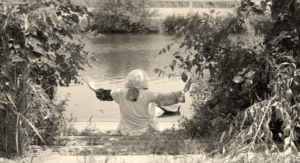
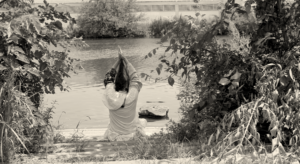
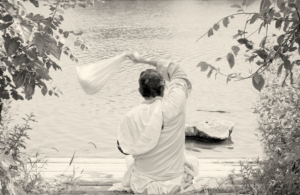
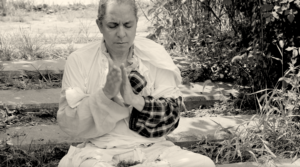
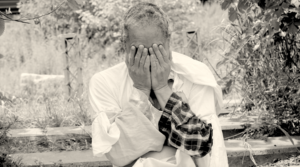
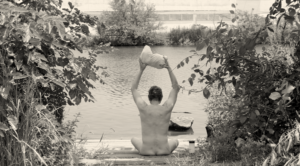
Nicolás Dumit Estévez Raful Espejo Ovalles Morel, Cabello / A Post Pandemic Ritual, 2024
Stills from video by Thelma García, and Laia Solé
Images: courtesy of Nicolás Dumit Estévez Raful Espejo Ovalles Morel / These images must not be used without previous permission from the artist