Goddess Worship
Hecate: Goddess of the Underworld, Warrior Against the Titans, and Favored by Zeus
Hecate is known to neo-pagans as a ‘dark goddess’ of the night, one who wields her power as a protector of all who summon her.
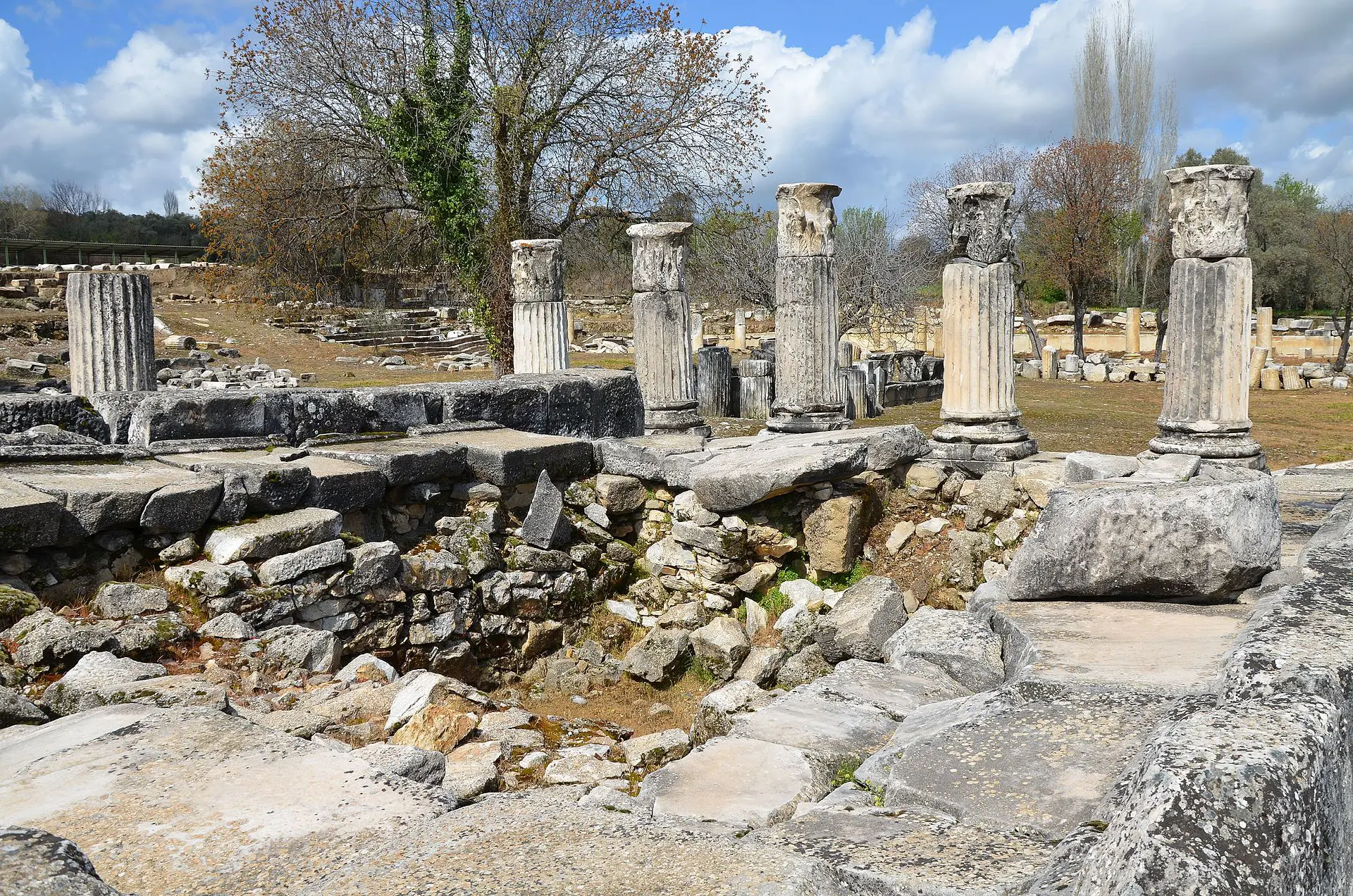
The ruins of the Temple of Hecate in Lagina, Turkey.
Many trace Hecate’s origins to Greek mythology, where she is highly revered and favored by Zeus. She was the only child of the Titanes Perses and Asteria from whom she received her power over heaven, earth, and sea. She was not always the Goddess of the underworld, magic and healing, but assumed these characteristics in the Greek mythological pantheon.
Yet Hecate’s origins go far further back than ancient Greece. There is a temple to Hecate in Lagina, Turkey, where she was worshiped. The Emperor Augustus financed the construction of the Temple of Hecate.
Scholars trace her origins even further back than Ancient Greece, possibly to Mesopotamia, where she was worshiped by cultures that pre-dated the Grecian era. In the scholarly article, Hekate’s Roots in the Sumerian-Babylonian Pantheon According to the Chaldean Oracles, Pietro Mander’s research shows a definite correlation between Hecate and Ereshkigal, the Babylonian Goddess who journeyed to the underworld and back.
In her 2005 article, Sarah I. Johnston once again outlines a general picture of this divine figure, in which she accepts, on the grounds of the Papyri Græcæ magicæ, the connection between Hekate and Ereš-kigal, the queen of the Sumerian and Babylonian netherworld, whose features closely resemble those of the Greek goddess. In a number of different studies, therefore, the scholarly literature confirms the connection between Hekate and the Mesopotamian cuneiform tradition.
Hecate’s origins reach further back in time than the organization of the Greek pantheon. When invoking Hecate, always keep in mind how this ancient Goddesses’ beginnings give her dominion over earth, heaven and the seas. The Greeks imparted her with overseeing the underworld. Yet Hecate was so much more than this! Mander says, “the goddess’ celestial nature as a personification of the Anima mundi” is evident – and these qualities are ignored by the Greeks, who revered her, but fashioned her image in their own eyes.
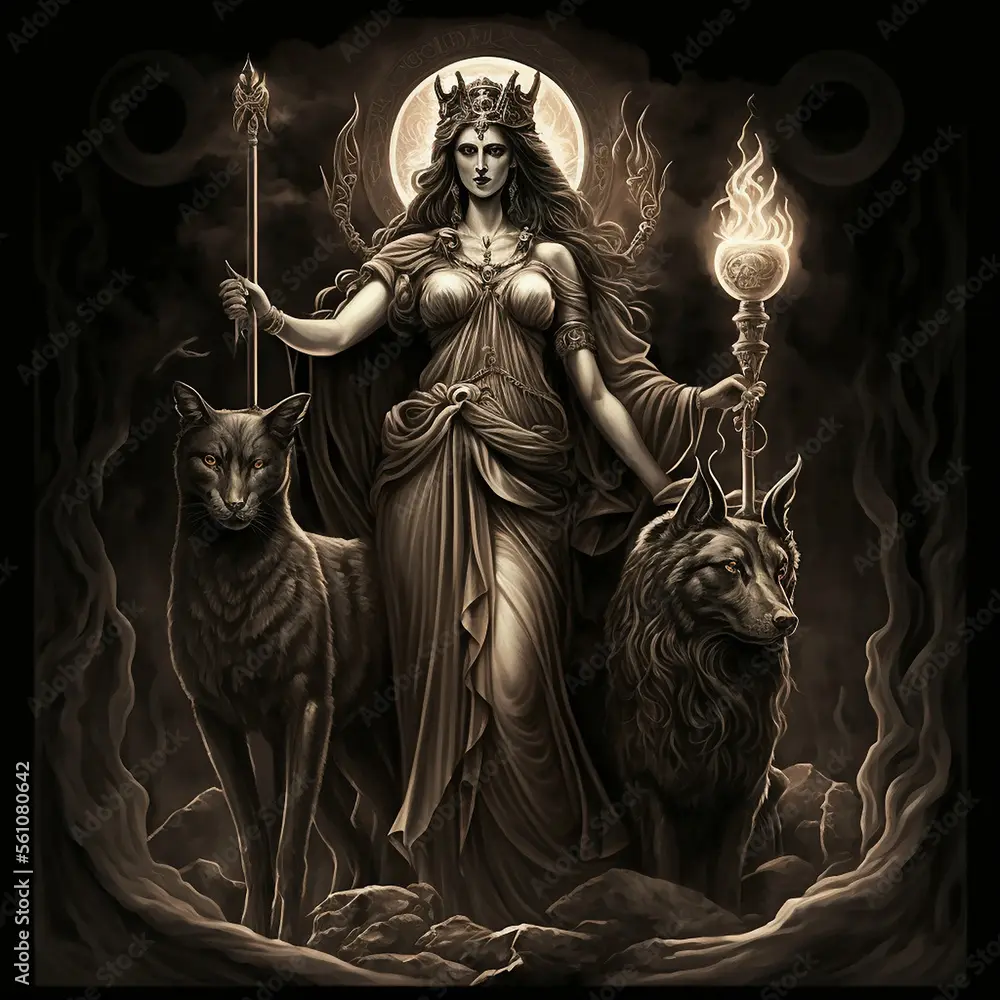
Oh, Great Goddess Hecate, overseer of the underworld, guardian of the crossroads, healer and protector.
Today, Hecate is known as the Goddess of the crossroads, and she is pictured with a staff with two snakes intertwined. The snakes as presented are a symbol of her healing powers. She is flanked on either side by two huge dark dogs, who could be calm and stalwart – or turn vicious in the face of adversity. It is no wonder Hecate is worshiped worldwide by neo-pagans, many who see her as the Goddess of witchcraft itself.
Hecate has been a favorite of feminists and old school goddess worshipers, mainly because she stands in her own power, and is revered and feared for her inborn qualities. She is also known as a triple Goddess, embodying the mother, maiden and crone, and showing her three faces to those who worship her.
— Elizabeth Kirwin